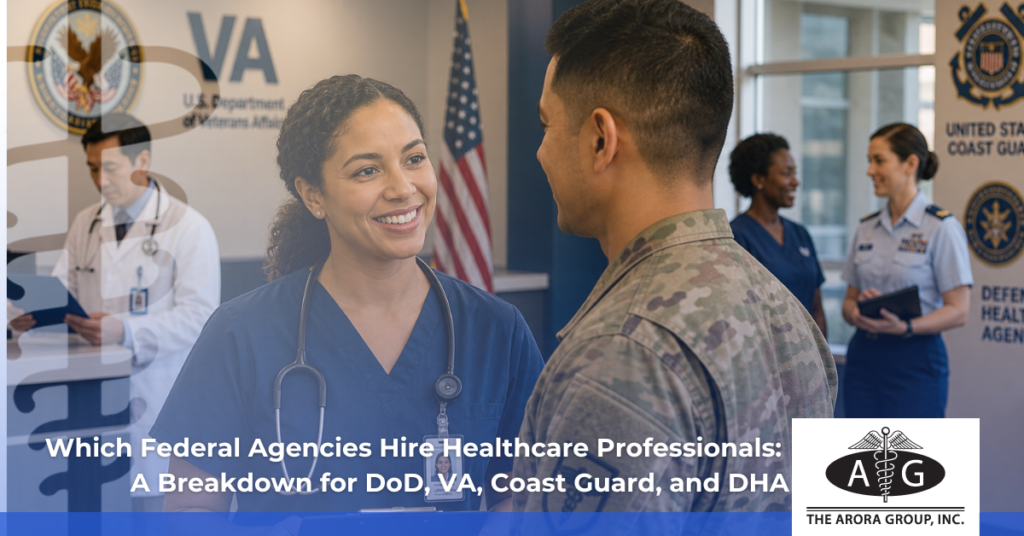
If you’re a healthcare professional exploring federal employment, understanding where your skills fit is crucial. This guide explains the major federal agencies that hire clinicians and allied health staff, what roles are common, and practical steps to pursue these career paths. It’s written for clinicians, nurses, therapists, and public health specialists considering federal service, with concrete examples and actionable next steps.
Who hires healthcare professionals in the federal system?
Several U.S. federal agencies recruit healthcare workers to serve military personnel, veterans, civilian employees, and beneficiaries. The four main agencies covered here are the Department of Defense (DoD), the Department of Veterans Affairs (VA), the U.S. Coast Guard, and the Defense Health Agency (DHA). Each agency has its own mission, staffing models, and clinical specialties, but all share a commitment to high standards of care and professional development.
Department of Defense (DoD)
DoD health system roles span military treatment facilities (MTFs), student health services on bases, and overseas clinics. Common positions include physicians, nurses, clinical social workers, pharmacists, physical and occupational therapists, laboratory scientists, and radiology staff. Opportunities exist for both active duty and civilian personnel, with pathways that emphasize teamwork in high-demand environments and rotations that build broad clinical experience.
Typical roles and pathways
- Physicians (general and specialty), with options for military or civilian status
- Nurses (RN, APRN, nurse practitioners) in inpatient and outpatient settings
- Allied health professionals (PT, OT, SLP, pharmacy staff)
- Lab technologists and radiology technicians
- Public health and preventive medicine specialists
Department of Veterans Affairs (VA)
VA facilities provide care to veterans through a nationwide network of hospitals, outpatient clinics, and community care programs. Roles mirror civilian healthcare but with a federal footprint and a strong emphasis on geriatric, mental health, and rehabilitative services. Positions range from staff clinicians to management and research roles, with complete career ladders and veteran-focused benefits.
Typical roles and pathways
- Physicians and surgeons with opportunities in primary care and specialty clinics
- Nurses (including nurse practitioners and physician assistants)
- Mental health professionals (psychologists, social workers, psychiatrists)
- Rehabilitation therapists (PT, OT, SLP)
- Pharmacists and pharmacy technicians
- Medical technicians, radiology, and lab personnel
U.S. Coast Guard
The Coast Guard maintains health services for service members and beneficiaries, often at smaller clinics and specialized units. Clinicians may work in public health, preventive medicine, and direct patient care roles aboard vessels or at shore facilities. The Coast Guard offers both active duty and civilian opportunities, with a focus on versatility in operational settings.
Typical roles and pathways
- Physicians and nurse practitioners supporting mission readiness
- Physician assistants, nurses, and clinical technicians
- Behavioral health professionals and preventive medicine staff
Defense Health Agency (DHA)
The DHA oversees the military health system, coordinating care across DoD facilities and ensuring standardization of clinical practices. Roles at the DHA often support system-wide initiatives, health informatics, readiness, and policy development, in addition to direct patient care positions at DoD facilities.
Typical roles and pathways
- Healthcare administrators and program managers
- Clinical staff deployed across DoD facilities
- Health informatics specialists and data analysts
- Policy and compliance roles within the military health system
What to know before applying
Federal hiring often uses specific processes, including USAJOBS applications, qualification standards, and veteran or special hiring authorities. Expect comprehensive credential verification, security clearances, and structured career development plans. Networking with current federal employees, attending job fairs, and leveraging mentorship programs can improve your chances.
Strategies to boost your eligibility and application success
Use these practical steps to strengthen your resume and stand out in federal postings:
- Map your clinical experience to the agency’s mission and job announcements.
- Obtain necessary licenses and certifications recognized across federal facilities.
- Highlight leadership, readiness, and teamwork, valued in DoD, VA, Coast Guard, and DHA roles.
- Prepare for the USAJOBS resume format and tailor your statements to each vacancy.
- Seek mentorship or shadowing opportunities with current federal employees in health roles.
Illustrative scenario: applying as a nurse practitioner
Imagine a hypothetical nurse practitioner named Maria who wants to serve in the DoD. Maria has acute care experience, strong teamwork skills, and a background in emergency and primary care. She researches DoD civilian clinician positions, updates her licensure to the relevant state and specialty certifications, and crafts a resume that emphasizes care coordination for diverse patient populations, including active duty service members and their families. She also drafts a concise personal statement describing how her readiness-focused mindset aligns with military medicine. Maria applies through USAJOBS, requests informational interviews with current DoD civilian clinicians, and follows up with a tailored cover letter referencing DoD’s mission and the role’s requirements.
Practitioner observation
In our experience working with federal health recruitment, candidates who demonstrate understanding of mission-driven care and the unique demands of service members tend to resonate with selection panels. A practical observation from a hiring panel: clear evidence of collaboration across specialties, adaptability in fast-paced environments, and a commitment to continuous learning improve interview outcomes for DoD and VA postings.
Expert attribution
Consider a regional health system executive who has collaborated with federal partners. They note that successful applicants often bring structured readiness experience, familiarity with electronic health records used in federal facilities, and demonstrated compliance with federal privacy and security standards. “When you can connect your clinical strengths to the agency’s priorities, readiness, veterans’ health, and population health, you stand out,” they say.
Common qualifications and credentials
While requirements vary by position, several qualifications recur across agencies:
- Licensed clinical credentials appropriate to the role (e.g., RN, NP, MD, PA)
- Board certification or eligibility for medical specialties as applicable
- Eligibility for security clearance or credential verification
- Current BLS/ACLS or other required certifications
- Experience in teamwork, leadership, and patient-centered care
Next steps to begin your federal health career
Concrete steps you can take today:
- Visit USAJOBS and search for healthcare positions in DoD, VA, Coast Guard, and DHA; set up job alerts.
- Prepare a federal-style resume tailored to at least three target postings.
- Reach out to current federal clinicians for informational interviews to learn about the hiring process.
- Ensure all licensure, certifications, and clearances are current and documented.
- Apply to a mix of civilian and military-adjacent roles to maximize exposure.
Explore related topics on our site to deepen your understanding of federal health careers
- Federal licensing and credentialing for clinicians
- Careers in military health systems
- VA health system overview and benefits
Conclusion and call to action
Federal health careers offer meaningful service with structured development paths. To move forward, pick one target agency, tailor your resume to a specific role, and reach out to a current federal clinician for guidance. Start by creating or updating your USAJOBS profile, drafting a focused cover letter that aligns with the agency’s mission, and applying to at least two relevant postings this quarter. If you’d like, I can help you identify suitable job announcements and draft tailored application materials.